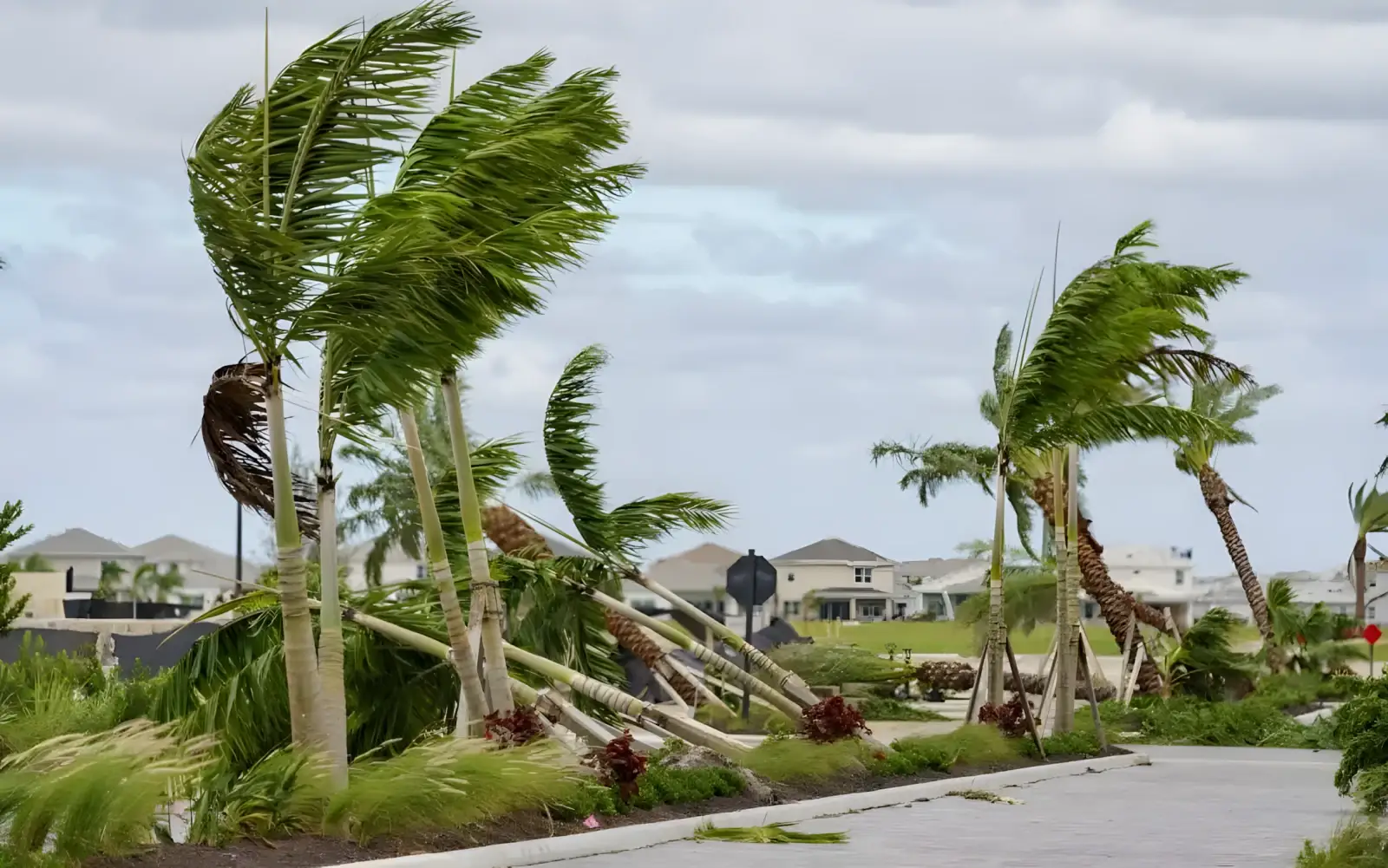
Hurricane season runs from 1 June to 30 November. Most Tampa property owners prepare the house and forget the yard, and then the yard is what damages the house.
The good news is that almost all storm landscape damage is predictable. The limb that comes through the roof was dead before the storm. The tree that goes over had a full, unthinned canopy. The patio furniture in the pool was on the patio the day before. None of that is bad luck.
Here is what actually reduces damage, in the order it matters.
Thin the canopy, do not top the tree
The single most useful thing you can do to a large tree is thin it. Wind passes through a thinned canopy. It pushes against a dense one, and a dense canopy on a tree with shallow Florida roots is a sail.
Start with the wood that is already dead. Dead limbs fail first and travel furthest. Then remove crossing branches and weak attachments, which are the narrow V-shaped joints where two trunks meet. Those split.
Do not top your trees. Cutting the crown back to stubs is still common in Florida and it is the worst thing you can do. Topping forces weak, fast regrowth from the cut. That regrowth attaches to the outer bark, not the core of the tree. Three years later you have a tree that looks trimmed and fails more easily than it did before.
Palms need the opposite of aggressive. Take off dead fronds and seed pods. Leave the green fronds alone. A palm cut back to a narrow tuft, sometimes called a hurricane cut, is weaker, not stronger. After a bad storm, the over-pruned palms are the ones lying down.
Check what is above the roof and the power drop
Walk the property and look up. Any limb over the roof, the pool cage, the driveway or the line from the pole to the house is a problem worth paying to remove now.
Tree crews book out completely once a storm is named. Work that costs a normal price in April costs a premium in August, if you can get anyone at all.
Clear the drains before the rain, not during it
A hurricane brings a very large amount of water in a short time. Anything blocking the path of that water becomes a flood.
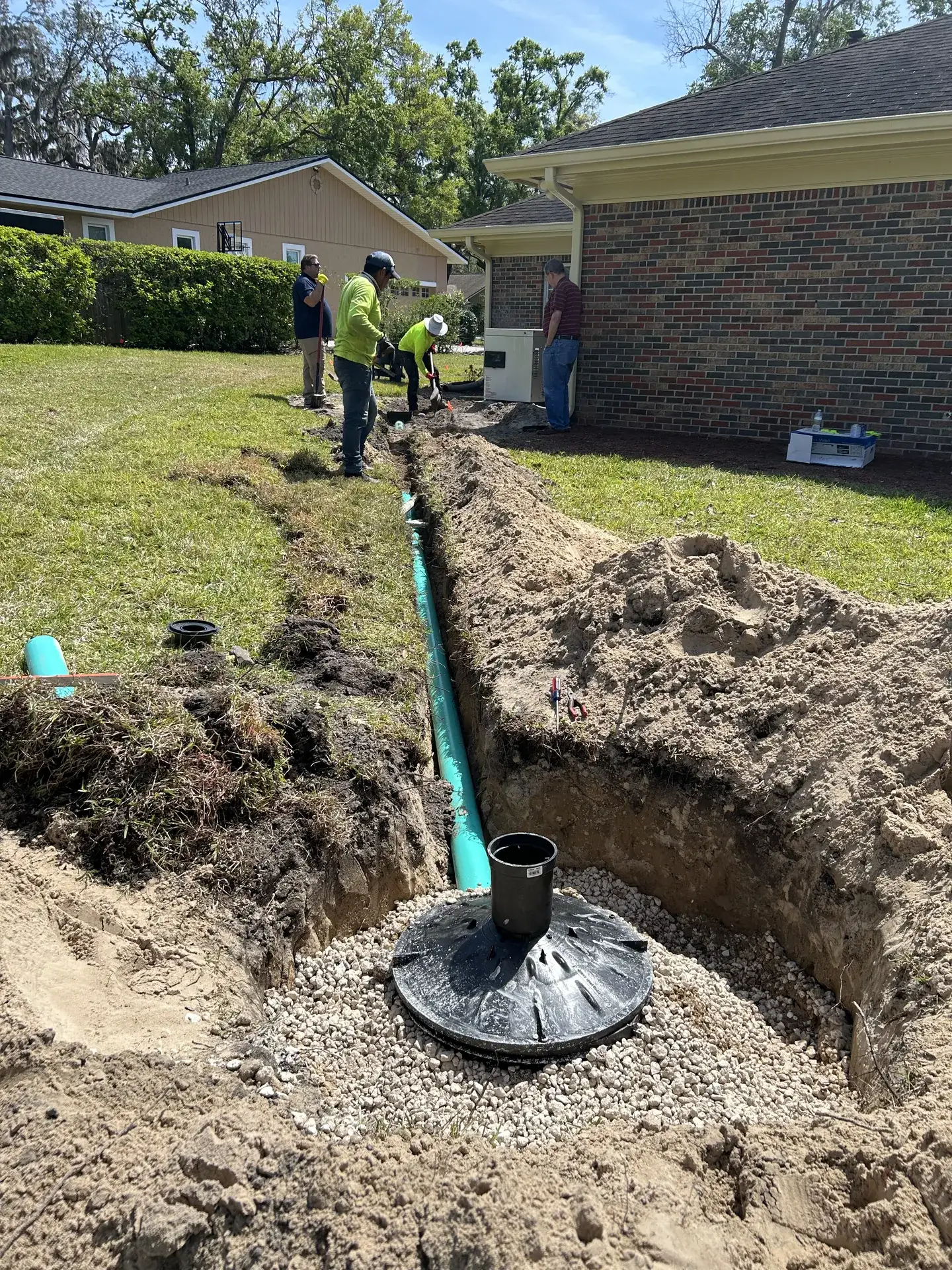
Clear the gutters and check that the downspouts discharge away from the building rather than into a bed against the wall. Clear leaf litter and mulch off drain grates and catch basins. If your property has a swale, check that it has not silted up and grown over, because a swale full of soil is just a lawn.
If water already stands on your property after an ordinary summer storm, a hurricane will make that considerably worse. That is a drainage problem to fix outside the season, not the week before.
Secure everything that is not attached to the ground
In sustained wind, loose objects become projectiles that break windows. The list is longer than people expect:
- Patio furniture, umbrellas and cushions
- Grills and propane tanks
- Potted plants, especially light plastic pots
- Garden ornaments, bird baths and hose reels
- Trash and recycling bins
- Loose pavers, edging stones and landscape lighting fixtures
- Shade sails and market umbrellas
Bring what you can indoors or into the garage. Anything too heavy to move should be laid flat on the ground.
Patio furniture still ends up in the pool every storm season, and it should not. It scratches the pool surface, blocks the skimmers and can damage the pump.
Do not fertilize before a storm
Nitrogen applied before heavy rain does not feed the grass. It washes off, and in Tampa it washes into the bay. Several Florida counties also restrict summer nitrogen application for exactly this reason.
Hold the fertilizer until after the system passes and the ground has drained.
The 48 hours before landfall
By this point trimming is finished. What is left is quick:
- Move or lay down everything loose.
- Clear grates, gutters and downspouts one final time.
- Turn the irrigation controller off. Automatic watering during a storm wastes water and can saturate ground that is already at capacity.
- Photograph the property. Wide shots of each elevation, plus the trees and any hardscape. Insurance claims go faster when you can show the before condition.
After the storm
Wait for daylight and check for downed lines before you walk the property. Treat every cable on the ground as live.
Then work in this order: clear access, clear hazards, clear debris. Anything hanging in a canopy, called a hanger, is dangerous and should be left to a crew with the right equipment.
Wash salt off the foliage if a coastal surge reached your property. Salt burn shows up a week later and is often mistaken for storm damage.
Finally, do not rush to remove a leaning tree. Some recover. An arborist can tell you which ones are worth saving, and that assessment costs a great deal less than the removal.
Get the trimming done in spring
Structural trimming is best done late winter through spring, before the season starts. Dead and hazardous wood can be removed at any time of year.
We walk properties across Tampa Bay before June and give owners a written list of what is a genuine risk and what is not. If you want that walk on your property, call the office.
Want this handled for you?
Tampa Turf Services has worked on commercial and residential properties across Tampa Bay since 1984. Call (813) 997-2537 or send a message.