Standing water on a commercial property is rarely just a puddle. It kills turf, rots root systems, undermines paving, breeds mosquitoes, creates a slip claim on the walkway and eventually finds its way to the slab.
It is also one of the few landscape problems that gets worse on its own. Water carries soil, soil silts up the path water was using, and the next storm is worse than the last.
Tampa rain is the design case, not the average
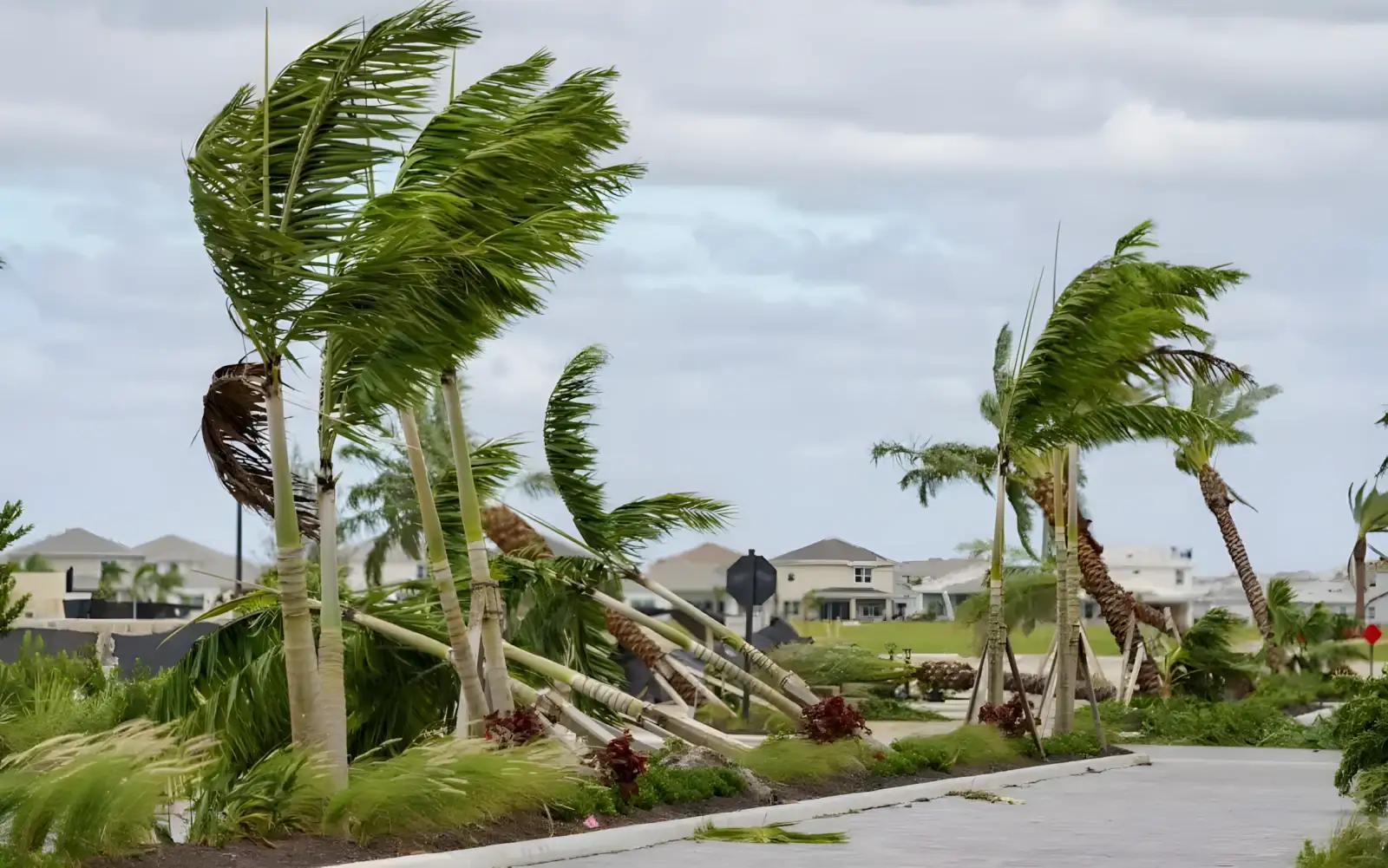
Tampa receives more than 45 inches of rain a year, and most of it arrives in a few summer months as short, intense storms. Two inches in an hour is a normal July afternoon here.
A drainage system sized for average annual rainfall will handle nine months of the year and fail in the three that matter. The design case is the storm, not the average.
Find the cause, not the symptom
The visible puddle is where water collects. It is usually not where the problem is.
On Tampa commercial sites, the recurring causes are:
The parking lot drains toward the building. Common on older properties where the lot was resurfaced and the grade changed slightly. A resurface adds height, and the fall that used to move water away no longer does.
Downspouts discharging into a bed. A commercial roof puts a large volume of water on the ground very fast. If it lands in a bed against the wall, that water goes under the slab.
A silted swale. Swales are shallow channels shaped to carry water. They fill with soil and leaf litter over years, grass grows across them, and eventually there is no channel left. From the parking lot it looks like lawn.
Post-construction settlement. Fill compacts unevenly over the first years after a build. The grade set at handover is not the grade you have now.
Compaction from traffic. Ground driven over by trucks and mowers stops absorbing water. This is why the low spot is often exactly where vehicles turn.
Working out which of these applies is the whole job. Installing a drain in the wrong place moves the puddle rather than removing it.
French drains
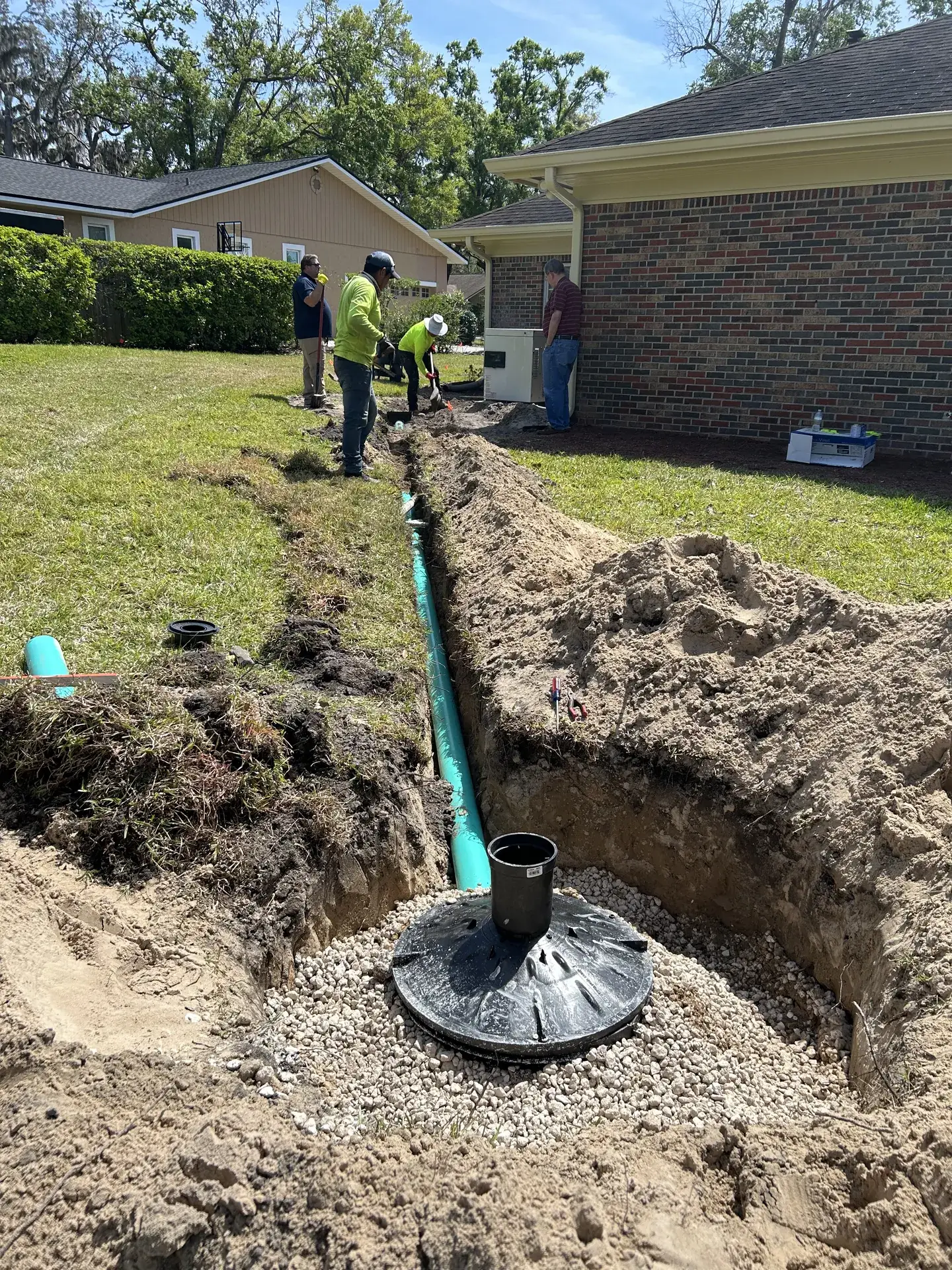
A French drain is a perforated pipe laid in a stone-filled trench and wrapped in filter fabric. It collects water along its whole length rather than at one point, which makes it the right answer for a broad wet area rather than a single low spot.
Two things decide whether it lasts. The filter fabric, which keeps silt out of the stone, and the fall, which has to be continuous all the way to the outlet. A French drain that is level in the middle is a buried pond.
On long runs, clean-out access is worth the small extra cost. Without it, a partial blockage means digging to find it.
Catch basins and piped systems
A catch basin is a grated box that takes water from a low point into a pipe. The right tool when water collects in one identifiable place.
The sizing rules are simple and frequently ignored. The grate and pipe have to be sized for the area draining into them, not for what fits in the hole. The invert, which is the pipe height at each end, has to keep falling all the way to the outfall. And the basin needs a sump below the pipe so silt collects somewhere you can clean rather than in the line.
Regrading and swales
Sometimes the correct answer is no pipe at all. Reshaping the ground so water runs where you want it is cheaper to build, needs no maintenance and cannot clog.
Regrading works when there is somewhere for the water to go and enough room to build the fall. Rebuilding a silted swale is often the highest-value drainage work on an older property, because the system was designed correctly and has simply filled in.
Where the water is allowed to go
This is the constraint that shapes the whole design, and it is site-specific. You need a legal outfall: a stormwater structure, a retention pond, a right-of-way connection or an approved surface discharge.
Discharging onto a neighboring property is not an option, and in Florida it is a reliable way to acquire a dispute. Identify the outfall before designing anything upstream of it.
What it costs to leave it
Drainage work is disruptive and it is not visible when finished, which is why it gets deferred. The comparison worth making is against what deferring it costs:
- Turf replacement, repeatedly, in the same area
- Paver and sidewalk settlement, which becomes a trip claim
- Root rot in mature trees and shrubs, which are expensive to replace at size
- Mosquito complaints from tenants
- Water reaching the slab, which is a building repair rather than a landscape one
Most drainage jobs cost less than one round of the damage they prevent.
Maintaining what you have
If your property already has drainage, it needs checking. Twice a year, and again before hurricane season:
- Clear grates of leaf litter and mulch. Mulch washing off a bed onto a grate is the most common blockage we find.
- Check the sumps in catch basins and clear accumulated silt.
- Walk the swales and confirm they still have a channel.
- Confirm downspouts are still connected and discharging where they should.
That list takes an hour on most properties and prevents most failures.
If water is standing on your property after ordinary summer rain, call the office. We survey the site, work out where the water actually comes from, and price the fix.
Want this handled for you?
Tampa Turf Services has worked on commercial and residential properties across Tampa Bay since 1984. Call (813) 997-2537 or send a message.